Indoor Reopening Survey, Testing Locations, FFCRA Reminders
Wednesday, June 24, 2020
The Illinois Restaurant Association continues to engage with local, state, and federal officials to help our employers and employees address concerns about COVID-19.
Please see the below resources and information for your business - updated as of 5:40 p.m. on Wednesday, June 24.
***
Tell Us About Your Indoor Dining Reopening Plans

The Illinois Restaurant Association is currently surveying restaurants and bars around the state to determine the status of reopening indoor dining during Phase IV of Restore Illinois.
Please take two minutes to complete our survey to share your current plans and any challenges you are facing.
Click here to complete the survey.
Click here to review the state of Illinois Phase IV guidance for restaurants and bars. Operators must also look to their local municipalities and health departments for further guidance. The city of Chicago's Phase IV reopening guidance for restaurants and bars can be found here.
State of Illinois, City of Chicago COVID-19 Testing Locations
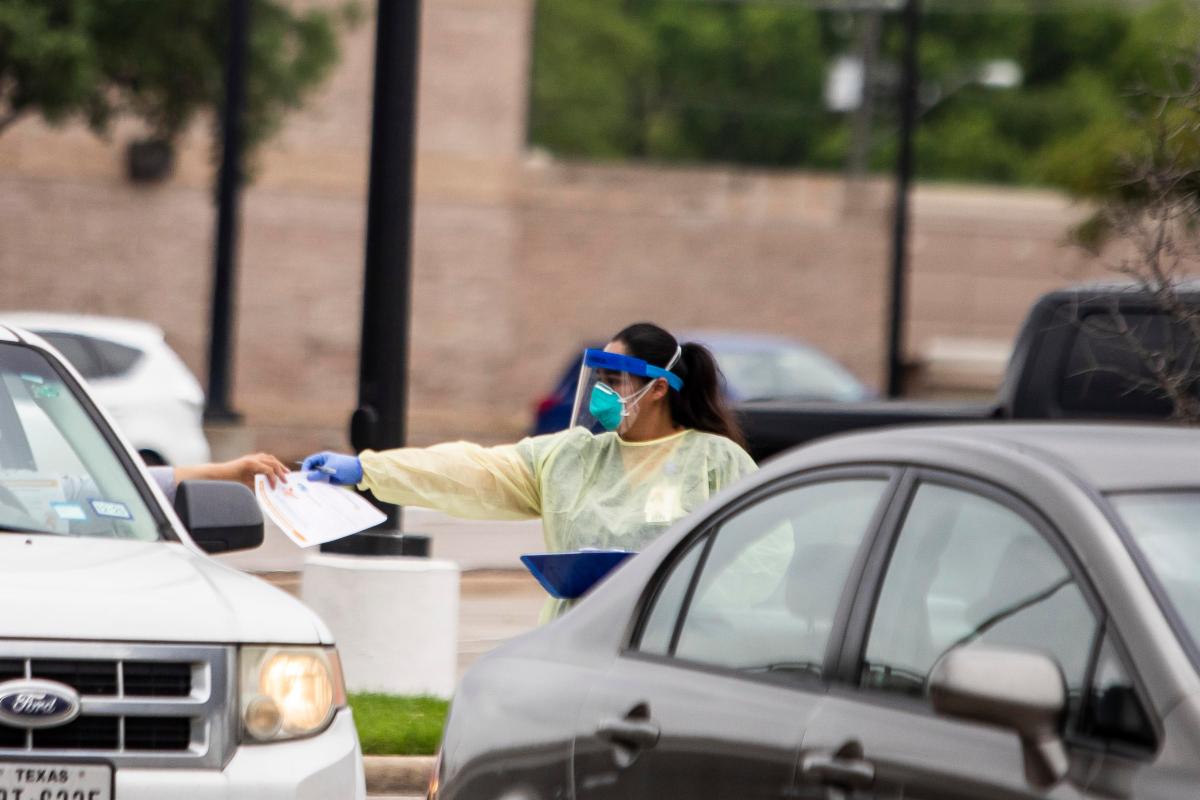
Click here for a list of testing sites throughout the state of Illinois. Please note not all testing sites listed are managed by the Illinois Department of Public Health. This list will be updated frequently.
The city of Chicago has opened five testing sites throughout Chicago that bring testing to communities disproportionately impacted by COVID-19 global pandemic. All tests at the City testing sites are free and all people regardless of citizenship status can be tested.
Residents who are looking to be tested can register on site or online at ChicagoCOVIDTesting.com. Click here to find a Chicago area testing site near you.
Employer Responsibilities Under Federal FFCRA
The Families First Coronavirus Response Act (FFCRA) went into effect on April 1, 2020 and will expire on December 31, 2020. The Act created two temporary leave programs – Emergency Paid Sick Leave (EPSL) and Emergency Family and Medical Leave Expansion (EFMLE) – that require private sector employers with less than 500 employees to provide leave to employees impacted by COVID-19.
Under the Act, covered employers qualify for 100 percent (full costs of both leave programs) reimbursement through refundable tax credits administered by the U.S. Department of the Treasury.
The U.S. Department of Labor (DOL) through its Wage and Hour Division is responsible for implementing and enforcing the new leave mandates. The Department issued implementing regulations on April 1, 2020, which detail employer and employee obligations, as well as an exemption available to qualifying small employers with fewer than 50 employees.
Covered employers are required to provide EPSL to full-time employees up to 80 hours, and part-time employees up to the number of hours they work on average over a two-week period. There are no eligibility requirements, meaning the employee is eligible immediately upon hire. There are very specific reasons for EPSL, detailed below.
-
Employee is subject to a quarantine or isolation order related to COVID-19;
-
Employee has been advised to self-quarantine by a health care provider because of CVOID-19;
-
Employee is experiencing symptoms of COVID-19 and is seeking a medical diagnosis;
-
Employee is caring for an individual, which includes “an employee’s immediate family member, a person who regularly resides the employee’s home, or similar person with whom the employee has a relationship that creates the expectation that the employee would care for the person if he/she is advised to quarantine or self-isolate.” The key is there must be an existing relationship with the person; and
-
Employee is caring for a son or daughter whose school or place of child care is closed or whose child care provider is unavailable due to COVID-19.
Click here for an overview of the law from the National Restaurant Association.
Click here to read the employer paid sick leave requirements from DOL.
Click here to review the FAQ from DOL.
Make Way for Dining in Chicago - Five New Street Closures
Today, Mayor Lightfoot along with the Chicago Department of Business Affairs and Consumer Protection and Department of Transportation announced an expansion to Chicago’s citywide outdoor dining street closure program. The expansion will be in effect starting this weekend and will close streets in five additional neighborhoods to continue helping small and local businesses increase operations.
The expanded outdoor dining program will close streets and utilize the public way to allow local businesses to establish operations outdoors. The following areas are included in the expansion:
-
Balmoral Street – closed on both sides of North Clark
-
Chinatown Square – adjacent to Archer Avenue from Wentworth to Princeton
-
Taylor Street – closed from Loomis to Ashland
-
Oliphant Avenue – closed from Northwest Highway to the first alley to the North
-
75th Street – sidewalk dining areas from Indiana to Calumet
In addition to expanding the open streets outdoor dining program, the City has also approved permits for over 30 parking lots to allow businesses to expand capacity for outdoor service. The parking lot permits are immediately in effect and will allow businesses to conduct operations in the parking lot for up to 180 days.
Click here to read the announcement.
Click here to learn more about outdoor dining options for Chicago restaurants.
City of Chicago Phase IV - Occupancy Clarifications
Last week, Mayor Lori Lightfoot and Business Affairs and Consumer Protection (BACP) Commissioner Rosa Escareno announced that the city of Chicago will begin Phase IV - Gradually Resume on Friday, June 26.
Restaurants will be permitted to resume indoor dining at 25% occupancy per room - or 50 people per room (whichever is fewer) - at the beginning of Phase IV.
BACP has provided the following clarifications and guidance related to occupancy:
-
In order to determine 25% occupancy:
-
Use occupancy placard and divide by 4
-
OR, calculate square footage of indoor space and then divide by 60.
-
Restaurants should use total square footage to determine 25% occupancy, not just dining room space
-
Business owners may determine how a "room" is defined. The city's intention is that all rooms are fully separate
-
Staff should not be included in the 50 per room or capacity calculations
-
Tables and seats in a room where 50% or more of a wall can be removed via the opening of windows, doors, or panels do not count toward indoor occupancy, provided that dining tables are within 8-ft from such outdoor openings
Click here to read the Phase IV - Gradually Reopen guidelines for restaurants and bars.
The IRA will continue to advocate for increases in indoor dining occupancy during Phase IV with necessary safety measures in place.
Key points from the Phase IV guidelines that are updated from the Phase III guidelines:
-
Each indoor room / floor is limited to no more than 50 individuals, while practicing social distancing, or 25% capacity (whichever is fewer)
-
No more than 10 people per table
-
For event venues / banquet halls, adhere to capacity and gathering restrictions for indoor / outdoor spaces (depending on setting)
-
All patrons must be seated; counter / bar seating allowed if 6 ft distancing can be maintained between customers (consider use of Plexiglas between customers and bartenders)
-
Cafeterias, buffets, or self-serve food may resume if an employee is serving the food and wearing proper PPE
Guidelines Chicago Restaurants and Bars Need to Know
The IRA has compiled the various operational guidelines that Chicago restaurants and bars must be aware of as they reopen, including: sidewalk café and expanded outdoor dining FAQs, federal paid sick leave requirements, cocktails to go regulations, 11:00 p.m. ending time for alcohol sales notice, and more. Click here to review the guidelines.
Pro Bono Architectural Design Network for Outdoor Dining

In partnership with the Illinois Restaurant Association, City Open Workshop is offering pro bono architectural design assistance for outdoor dining at restaurants. Click here to visit the resource guide and reach out to qualified professionals today.
If you are interested in learning more and partnering with professional architects, landscape designers, and zoning professionals, click here to submit an inquiry.
In addition, City Open Workshop is hosting a series of virtual design sessions and office hours for small businesses. For more information and to sign up, click here.
Updated PPP Forgiveness Guidelines
This week, the Small Business Administration (SBA) and U.S. Department of Treasury released updated Loan Forgiveness rules. The improvements of the PPP Flexibility Act, new details on loan forgiveness timing, and required documentation for “business activity” exemptions from loan forgiveness reduction are included below.
New Improvements – Confirmed for PPP Recipients
-
Extends the PPP covered period from eight to 24 weeks, or an additional 16 weeks for current PPP recipients.
-
PPP recipients who obtained a loan before June 5, 2020 can choose to use the original eight-week period.
-
To maximize forgiveness, 60% of PPP loan funds must be spent on payroll expenses (this updates the previous 75% requirement).
-
For loan maturity, the minimum maturity is five years for PPP loans made on/after June 5, 2020. Lenders and borrowers can extend the maturity date of earlier PPP loans by “mutual agreement.”
Clarity on Timing for Loan Forgiveness Process
A restaurant can submit its loan forgiveness application before the end of the covered period if the restaurant has used all of the loan funds for which the business is seeking loan forgiveness.
-
The lender has 60 days after receiving a PPP loan forgiveness application to issue a decision on forgiveness to the SBA.
-
In turn, the SBA will remit the appropriate forgiveness amount to the lender, plus any interest accrued through the date of payment, no less than 90 days after the lender issues its decision on PPP loan forgiveness to the SBA.
-
The lender must inform the borrower of the loan forgiveness amount and the date on which the borrower’s first payment is due, if applicable.
Documentation Required to Demonstrate “Business Activity” Disruption and Obtain an Exemption from Loan Forgiveness Reductions Regarding FTE Rehiring
-
PPP recipients must certify in “good faith” documentation that their reduction in business activity during the PPP covered period is due to compliance with COVID Requirements or Guidance
-
If PPP recipient maintains this documentation, they are exempt from any reduction in loan forgiveness due to a reduction in FTE employees during the covered period.
-
Documentation must include “copies of applicable COVID Requirements or Guidance” for each business location and relevant borrower financial records.
-
SBA and Treasury believe this includes “both direct and indirect compliance with COVID Requirements or Guidance,” because much of the reduction in business activity due to COVID Requirements or Guidance is the result of state/local government closure orders that are based in part on guidance from the three federal agencies.
SBA Example: A PPP borrower is in the business of selling beauty products both online and at its physical store. During the covered period, the local government where the borrower’s store is located orders all non-essential businesses, including the borrower’s business, to shut down their stores, based in part on COVID-19 guidance issued by the CDC in March 2020. Because the borrower’s business activity during the covered period was reduced compared to its activity before February 15, 2020 due to compliance with COVID Requirements or Guidance, the borrower satisfies the Flexibility Act’s exemption and will not have its forgiveness amount reduced because of a reduction in FTEs during the covered period, if the borrower in good faith maintains records regarding the reduction in business activity and the local government’s shutdown orders that reference a COVID Requirement or Guidance as described above.
Click here to review the updated rules.
State of Illinois Releases Phase IV Guidelines for Restaurants
This week, Governor J.B. Pritzker released the Restore Illinois Phase IV Guidelines for Reopening for various industries, including restaurants and bars. Click here to read the full announcement. All four regions of the state are currently on track to move into Phase 4 on June 26.
Click here to read the Phase IV Guidelines for indoor and outdoor dining at restaurants and bars. The earliest effective date of these regulations is Friday, June 26.
There is no set capacity cap for restaurants and bars based on percentage of occupancy or number of people during Phase IV. Seated area capacity of restaurants and bars should be determined by arranging seating to provide a minimum of six feet between tables or other designated patron service areas.
Indoor dining can reopen with groups of 10 or less, with tables spaced 6-feet apart in seated areas and with standing areas at no more than 25% of capacity. Capacity restrictions will be reassessed based on the latest science and public health metrics on an ongoing basis throughout Phase IV.
Additional guidelines to note:
-
For booth seating, employers may use consecutive booths to serve patrons of unrelated parties only if employer installs an impermeable barrier with a height of 6-ft or greater from the floor between booths. Use of barriers should not impede entry/ exit or impose a fire risk. Use of plexiglass is a best practice.
-
Buffets and self-service food stations (e.g. hot and cold bars, bulk items, baked goods) are permitted, and should adhere to minimum additional guidelines.
-
Hotel meeting rooms and ballrooms, as well as other indoor and outdoor event venues (excluding arenas, stadiums, and other mass gathering venues) must adhere to the state's Meetings and Social Events Guidelines.
-
Meetings and social events are limited to lesser of 50 guests with or 50% of overall room capacity.
A state of Illinois Phase IV reopening toolkit for restaurants and bars is also available here.
Restaurants and bars located in the city of Chicago must follow the city's Phase IV - Gradually Reopen guidelines for restaurants and bars. Restaurants and bars should refer to local authorities and health departments for additional guidelines during Phase IV.
|

 Email to a Friend